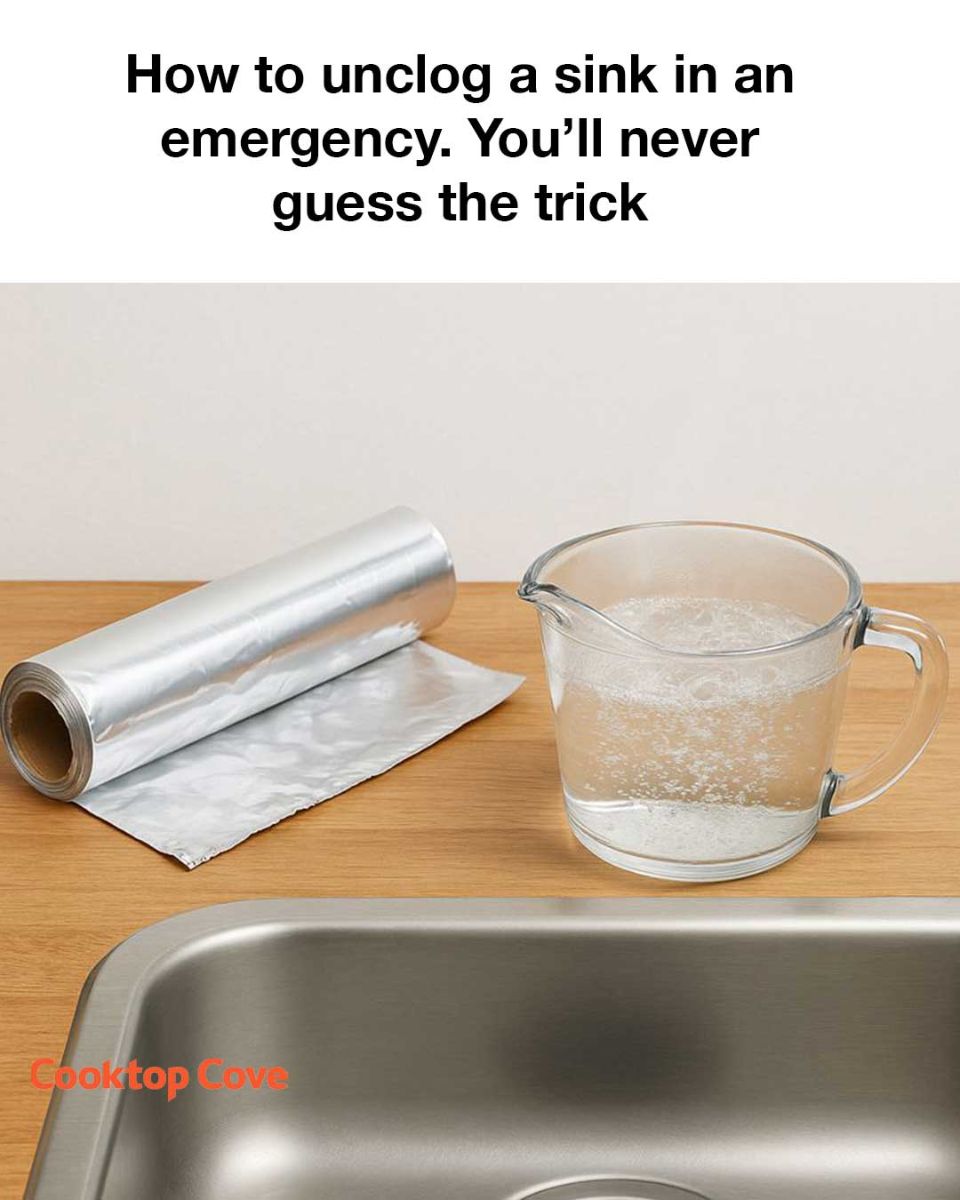
We’ve all been there—you’re in the middle of preparing dinner or perhaps about to host guests when suddenly, the water in your sink refuses to drain. Panic sets in as you realize you don’t have a plunger or any drain cleaner on hand. Fortunately, there’s an unexpected household item that can come to the rescue: aluminum foil. This simple hack not only saves the day but also adds a touch of science to your emergency plumbing skills.
In this article, we’ll explore why sinks seem to clog at the worst possible moments and introduce you to an ingenious aluminum foil trick that might just save you from a plumbing nightmare. Read on to discover how a common kitchen staple can help you unclog your sink quickly and effectively.
1. Why Sinks Clog at the Worst Possible Moment
Sinks often clog due to a buildup of debris, food particles, grease, and soap scum. These substances gradually accumulate in the pipes, narrowing the passageway and eventually leading to a blockage. The process is slow and insidious, often catching us off guard when we least expect it.Food blog affiliate
Studies show that kitchen sinks are particularly susceptible because of the variety of waste they handle. On average, a sink trap can accumulate up to 100 grams of waste before clogging becomes noticeable. The problem is exacerbated by cold water, which can cause fats to solidify more quickly, further contributing to blockages.
2. The Science Behind This Surprising Aluminum Foil Hack
The aluminum foil hack leverages the conductive properties of metal to transfer heat more effectively to the clog. Aluminum has a high thermal conductivity, meaning it can transfer heat quickly and efficiently. When combined with boiling water, the foil helps to soften and dislodge the materials causing the blockage.
Moreover, the crumpled texture of the foil creates additional agitation in the water flow, which helps to physically break up stubborn clogs. This makes the method particularly effective for soft, greasy blockages that are susceptible to heat.
3. What You Need: Aluminum Foil, Boiling Water, and a Few Minutes
To perform this hack, you’ll need a standard roll of aluminum foil, available in most kitchens. Additionally, you’ll require a kettle or pot to boil water—approximately 1 to 2 liters will suffice depending on the severity of the clog. Lastly, ensure you have a few minutes to focus on the task, as timing is crucial for the method’s success.
It’s always a good idea to have a cloth or towel on hand to manage any spills or splashes during the process. Safety should be your priority, so make sure you handle the boiling water with care.
4. Step One: Clear the Sink and Assess the Type of Clog
Begin by removing any standing water and visible debris from the sink. Use a cup or small container to bail out excess water, allowing you to better assess the situation. Look for signs of grease buildup, food particles, or soap scum, as these can help you determine the nature of the clog.
If the clog is localized to the sink trap, you’ll notice slow drainage or no drainage at all. If the issue persists despite your efforts, it may indicate a deeper problem within the plumbing system.
5. Step Two: Shape the Aluminum Foil for Maximum Impact
Verpassen Sie nicht die Fortsetzung auf der nächsten Seite