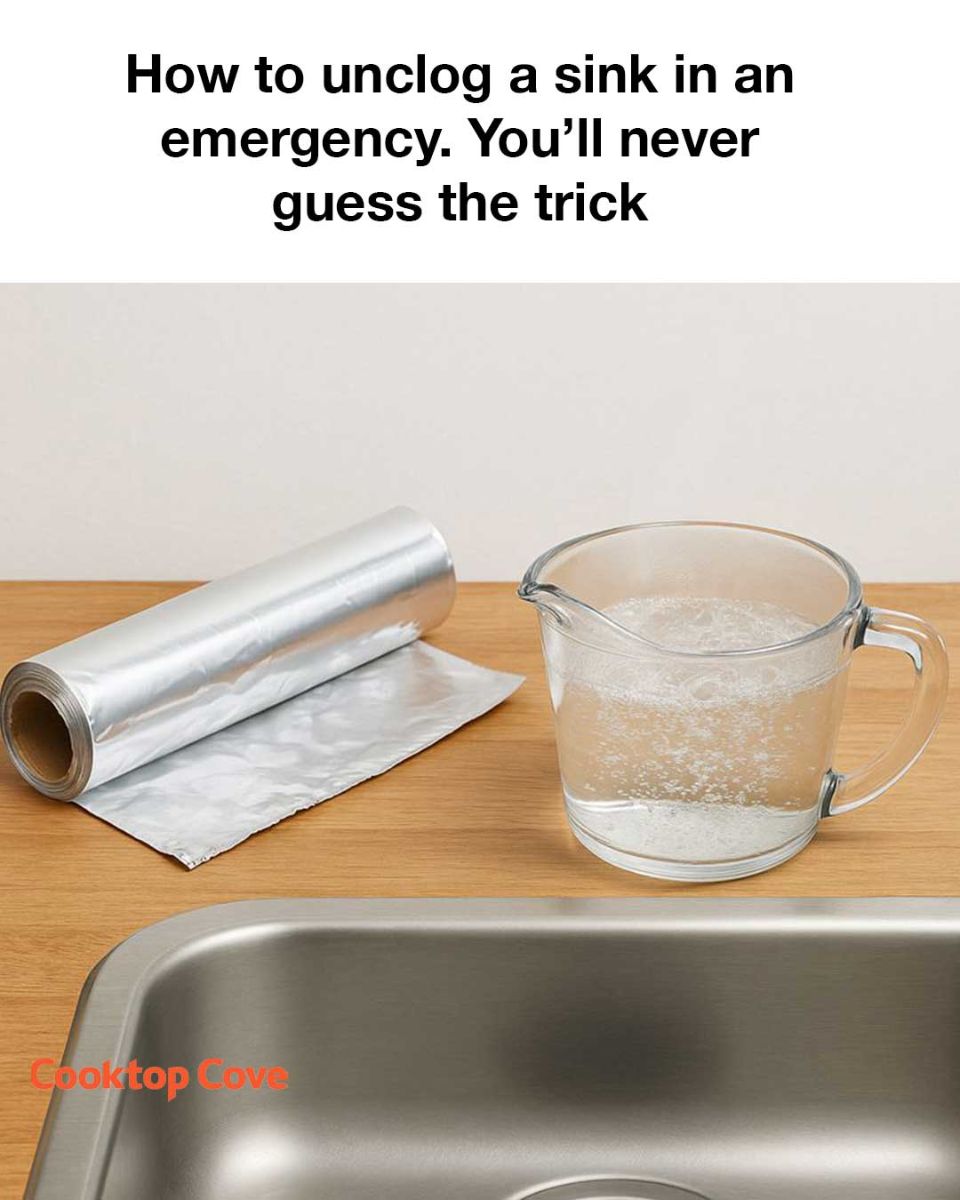
How to unclog a sink in an emergency. I had no clue about this
Tear off a strip of aluminum foil approximately 30 centimeters long. Crumple the foil into a loose ball, ensuring it’s small enough to fit into the drain but large enough to create resistance. The goal is to create a textured surface that will help agitate the clog when combined with boiling water.
Ensure the ball is compact yet crumpled, providing both structure and flexibility to navigate the pipes as the water flows through.
6. Step Three: Boil Water Safely and Get the Temperature Right
Fill a kettle or pot with 1 to 2 liters of water and bring it to a rolling boil. The water should reach a temperature of at least 100°C (212°F) to effectively dissolve grease and soften other materials causing the blockage.
Exercise caution when handling boiling water. Use pot holders or oven mitts to avoid burns, and pour the water steadily to prevent splashes.
7. Step Four: Deploy the Foil Trick and Pour the Boiling Water
Place the crumpled aluminum foil ball into the drain, ensuring it’s partially submerged. Slowly pour the boiling water directly over the foil, allowing the heat and agitation to work together to break up the clog.
As the boiling water flows through the pipes, it will transfer heat via the aluminum foil, softening grease and loosening debris. The crumpled texture of the foil will enhance the water’s movement, promoting better clearance of the blockage.
8. How the Aluminum Foil and Boiling Water Combo Breaks Up Gunk
The combination of aluminum foil and boiling water creates a potent physical and thermal reaction. The foil’s high thermal conductivity ensures that heat is rapidly transferred to the clog, breaking down greasy deposits and softening stubborn residues.
Additionally, the foil’s texture introduces mechanical agitation, helping to dislodge particles that have adhered to the pipe walls. The result is a synergistic effect that can restore normal drainage in a matter of minutes.
9. When This Viral Hack Works Best—and When It Won’t
The aluminum foil and boiling water trick is most effective for clogs caused by grease, soap scum, and small food particles. It can be particularly useful in kitchen sinks where these materials are commonly found. However, it may not work for clogs caused by large objects or solid masses like hair or fibrous materials.High protein foods
In cases where the clog is located deep within the plumbing system or involves non-degradable materials, alternative methods or professional assistance may be necessary.
10. Safety Warnings: Burns, Steam, and Pipe Damage to Avoid
Always prioritize safety when dealing with boiling water. Use appropriate protective gear such as oven mitts to avoid burns, and pour the water cautiously to prevent splashes. Be mindful of steam, which can cause scalding if you’re too close to the action.
It’s also important to consider the condition of your pipes. If you have older plumbing, the rapid change in temperature could potentially cause damage. In such cases, it may be wise to use moderately hot water instead of boiling.
11. Eco-Friendly and Budget-Friendly Benefits of the Foil Method
This method is not only effective but also environmentally friendly. Unlike chemical drain cleaners, which can introduce harmful substances into the water supply, the aluminum foil and boiling water hack uses non-toxic materials that are safe for the environment.
Additionally, the cost is minimal since aluminum foil is inexpensive and readily available. This makes it a budget-friendly option for quick fixes, allowing you to save money on professional services or expensive chemicals.
12. What to Try Next If the Aluminum Foil Trick Doesn’t Work
If the aluminum foil method fails to unclog your sink, consider using a plunger or a drain snake to tackle the blockage. A plunger can create suction to dislodge the clog, while a drain snake can reach deeper into the pipes to remove stubborn obstructions.
In persistent cases, it may be necessary to disassemble the P-trap under the sink to manually remove the clog. Always ensure you have a bucket to catch any water and debris during this process, and consider seeking professional help if you’re unsure about tackling the task yourself.