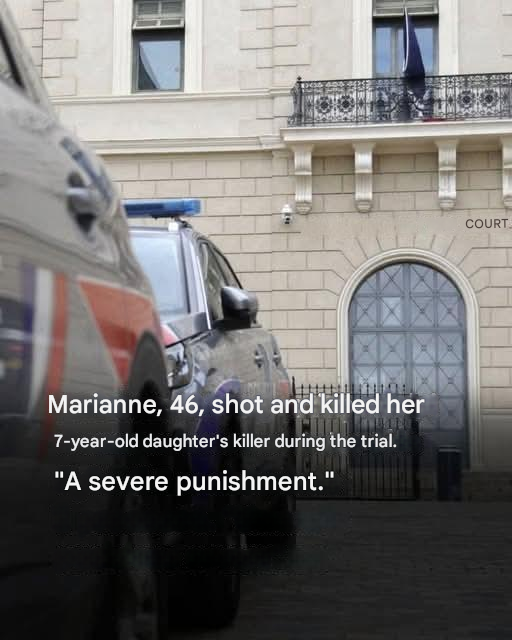
In Germany, in the early 1980s, a court case shook the country and continues to divide public opinion more than forty years later. The case of Marianne Bachmeier, a mother who, in the middle of a courtroom, pulled out a gun and cold-bloodedly executed the murderer of her seven-year-old daughter. Between tragedy, justice, and revenge, this story remains one of the most significant in German history.
The Murder of Little Anna
In 1980, seven-year-old Anna left home after an argument with her mother. She met 35-year-old Klaus Grabowski, a former sex offender with a criminal record for child molestation. Grabowski held the girl in his apartment for several hours before strangling her and hiding her body in a plastic bag. The crime sparked national outrage.
The trial that turns into tragedy
Two years later, the case went to trial. In the courtroom, Marianne Bachmeier, Anna’s mother, listened to the details of the crime. Overcome with grief, she suddenly pulled out a pistol and fired seven shots. Six of the shots hit Grabowski, who died instantly, before the judges, lawyers, and journalists present.
Chaos immediately broke out in the courtroom. The mother made no attempt to escape. She let herself be arrested, standing still, staring blankly. The German media immediately dubbed her the “vindictive mother.”
see the continuation on the next page
Verpassen Sie nicht die Fortsetzung auf der nächsten Seite
<div><!–nextpage–></div>
A divided Germany
From the beginning, the country was divided. For some, Marianne embodied the pain of a mother deprived of justice and seeking vengeance for her daughter. For others, she opened the dangerous door to private justice. The debate became national.
In 1983, after two years of proceedings, the verdict was delivered. Marianne was found guilty of manslaughter and illegal possession of a firearm. She was sentenced to six years in prison, but served only three before being released.
Polls at the time showed that public opinion was deeply divided: some considered the punishment too harsh, others too lenient.
Between pain and premeditation
Marianne Bachmeier’s life had already been marked by deep wounds. Her father had been a member of the Waffen-SS, she herself had suffered abuse and had given two of her children up for adoption before raising Anna, her third daughter, alone.
Years later, in 1995, she acknowledged that her actions hadn’t been purely impulsive. She admitted to premeditating them, stating that she wanted to prevent Grabowski from further tarnishing her daughter’s memory in court.
A tragic end
After her release, Marianne tried to rebuild her life away from the spotlight, but remained haunted by the tragedy. In 1996, she died of cancer at the age of 46.
Her story remains one of the most significant in German history and raises a universal question: how can a grieving mother go, and where is the line between justice and revenge?