2. Drying of the nail
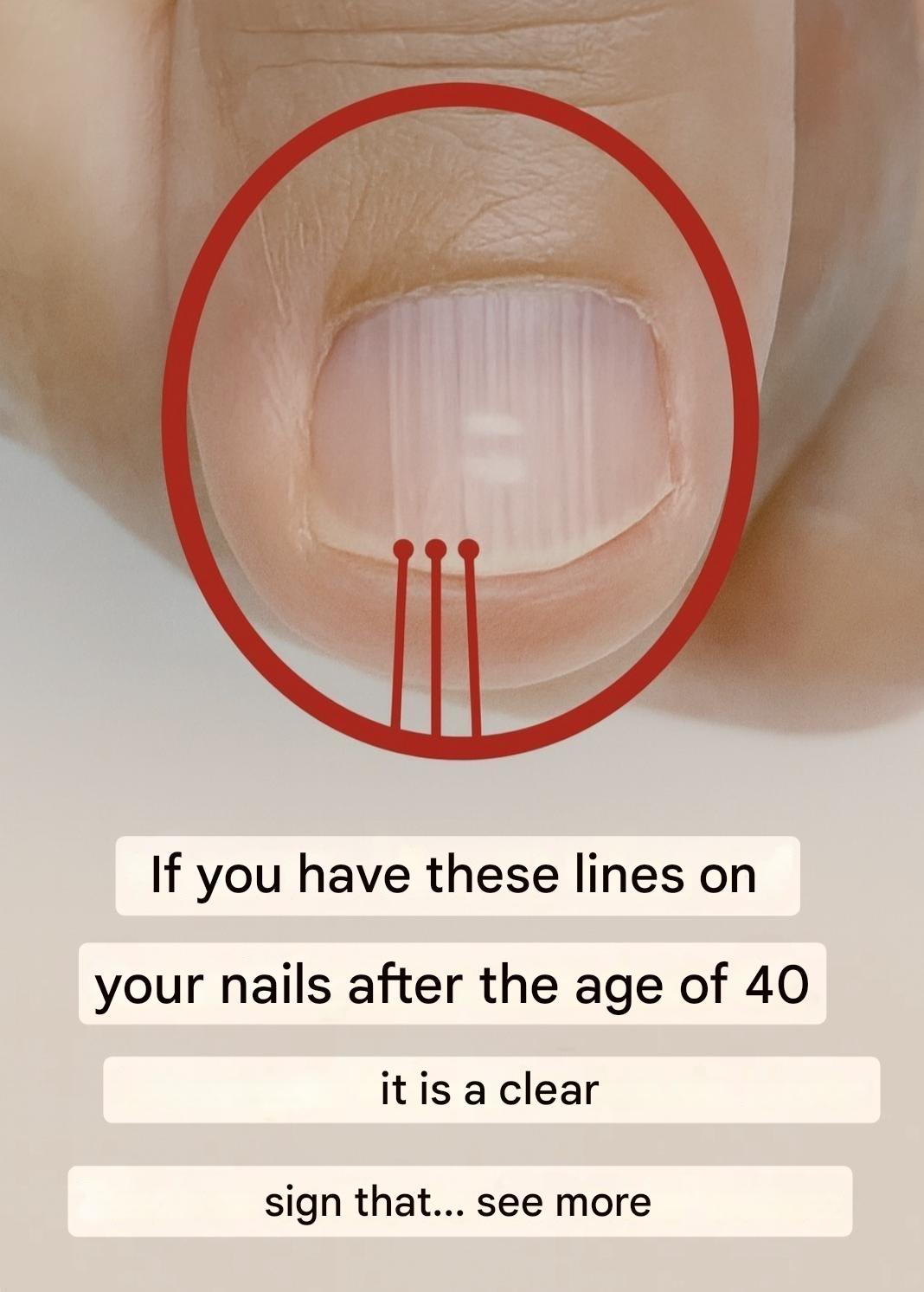
As we age, nails—like our skin—tend to become drier. A lack of moisture makes nails more brittle and accentuates ridges. Frequent contact with water, soap, and cleaning chemicals can worsen dryness.
3. Nutritional deficiencies
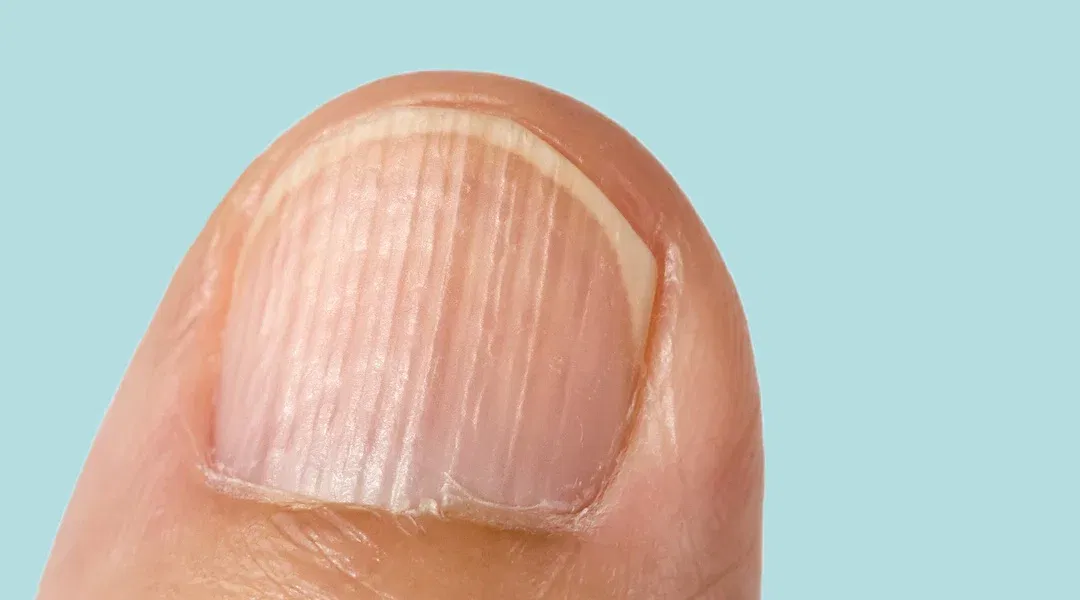
Low levels of important nutrients such as biotin, iron, zinc, and magnesium can weaken nails and make ridges more pronounced. Since metabolism and nutrient absorption often decline with age, deficiencies are more common after age 40.
4. State of health
In some cases, vertical ridges can indicate underlying health problems, including poor circulation, thyroid imbalance, or rheumatoid arthritis. If you also notice fatigue, brittle hair, or skin changes, it’s worth speaking to a doctor.
When should you be worried?
Vertical ridges are usually harmless, but you should see a doctor if you notice:
Changes in nail color (especially dark streaks or lines)
Splitting, peeling or thickening nails
Pain, swelling or inflammation around the nail
These can indicate fungal infections, trauma, or—in rare cases—melanoma, a serious form of skin cancer that can occur under the nail.