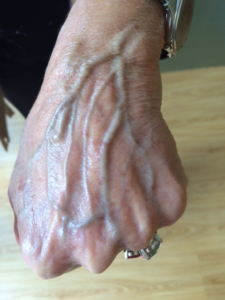
If you’ve noticed your hand veins becoming more visible — bulging, twisted, or suddenly standing out — you might wonder:
“Is this normal?”
“Should I be worried?”
The truth is, prominent hand veins are usually not a cause for concern.
They’re often the result of natural changes like aging, muscle gain, or dehydration — not disease.
But because our bodies communicate through subtle shifts, it’s wise to know the difference between normal variation and signs that deserve attention.
Let’s explore what causes veins in the hands to become more noticeable — so you can respond with clarity, not fear.
Because real health isn’t about panic — it’s about understanding what you see, calmly and wisely.
🔍 Why Do Hand Veins Become More Visible?
Several everyday factors can make hand veins stand out:
✅ Aging – Skin thins and loses collagen; fat pads under the skin shrink, making veins easier to see.
✅ Low Body Fat – Less tissue covering veins, common in athletes or those who’ve lost weight.
✅ Exercise & Muscle Gain – Increased blood flow and pressure cause temporary bulging during and after workouts.
✅ Dehydration – Lower fluid volume makes veins more pronounced.
✅ Heat Exposure – Warm temperatures dilate blood vessels near the surface.
💡 These changes usually develop gradually and aren’t painful — just more noticeable.
✅ Common Benign (Harmless) Causes
1. Normal Aging Process
As we age, the backs of our hands lose volume and elasticity.
The veins themselves don’t change — they just become more visible.
✅ This is normal and not a medical issue.
📌 Some people choose cosmetic treatments (like dermal fillers) for appearance only.
2. Physical Activity
Weightlifting, gripping tools, or even opening jars increases pressure in the arms and hands.
This temporarily pushes blood into superficial veins — causing them to “pop.”
✅ Veins usually return to normal after activity stops.
3. Genetics
Some people naturally have more visible veins due to:
Thinner skin
Higher vein density
Family traits
✅ No action needed — it’s just part of your unique body.
⚠️ When to See a Doctor
While most cases are harmless, certain symptoms may suggest an underlying condition.
Seek medical attention if you notice:
🔴 Pain, throbbing, or tenderness along a vein (possible superficial phlebitis)
🔴 Sudden swelling in one hand or arm (possible blood clot, though rare in hands)
🔴 Redness, warmth, or hard cord-like veins (infection or thrombophlebitis)
🔴 Numbness, tingling, or weakness (nerve compression or circulatory issue)
🔴 Skin changes like ulcers or discoloration (advanced venous disease or connective tissue disorder)
🩺 Diagnosis may involve ultrasound or blood tests.
❗ Rare Medical Conditions That Can Affect Hand Veins
Chronic Venous Insufficiency – Weakened valves cause blood to pool (more common in legs than hands).
Thoracic Outlet Syndrome – Compression of nerves or blood vessels between the neck and arm, causing swelling or visible veins.
Portal Hypertension – High blood pressure in liver veins (a very rare cause of visible abdominal or hand veins).
Trauma or Repetitive Strain – Repeated pressure or vibration (e.g., from tools or sports) can enlarge veins over time.
🩺 Most people with visible hand veins do not have these conditions.
✅ How to Support Healthy Circulation
Move regularly – Walking improves circulation and prevents pooling.
Avoid long periods of gripping or straining – Gives veins a rest.
Stay hydrated – Supports blood volume and vessel function.
Elevate hands occasionally – Helps reduce temporary swelling.
Wear gloves when working – Protects veins and skin from trauma.
💡 Don’t worry about appearance unless there’s discomfort or sudden change.
❌ Debunking the Myths
❌ “Bulging hand veins mean heart problems.” → False — they aren’t linked to heart disease.
❌ “Only unhealthy people get them.” → False — many fit, healthy adults have visible veins.
❌ “They’ll turn into varicose veins.” → Unlikely — true varicose veins are rare in hands.
❌ “You must treat them medically.” → Not true — most need no treatment at all.
💭 Final Thoughts
You don’t need to hide your hands just because the veins show.
They’re not flaws. They’re not warnings.
They’re simply part of how your body looks — today, and maybe for years to come.
So next time you look down and wonder:
“Is this new? Is it uncomfortable?”
If yes — talk to your doctor.
If not — wear those sleeves rolled up with confidence.
After all, your hands carry your story.
And every line, every vein, has its place.