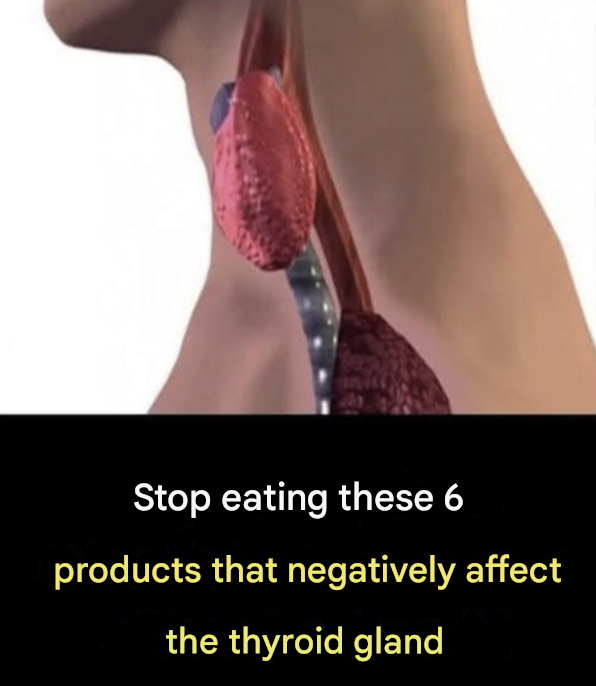
Your thyroid may be small—about the size of a butterfly at the base of your neck—but it plays a huge role in your overall health.
It controls metabolism, energy levels, mood, weight, and hormonal balance.
When the thyroid gland isn’t functioning properly—whether it’s underactive (hypothyroidism) or overactive (hyperthyroidism)—every system in the body is affected.
While medication is essential for thyroid disorders, diet can help—or make things worse.
Certain foods can disrupt thyroid function, interfere with hormone production, or worsen symptoms.
Here are 6 foods that can negatively impact your thyroid—and what to do instead.
❌ 1. Raw vegetables are goitrogenic
Hidden Thyroid Blockers
Food products worth paying attention to:
- Raw kale, spinach, broccoli, cabbage, Brussels sprouts, cauliflower, pak choi
These cruciferous vegetables contain goitrogens — compounds that can interfere with iodine absorption by the thyroid gland.
Iodine is essential for the production of thyroid hormones (T3 and T4).
Iodine blockage by goitrogens can worsen hypothyroidism and lead to goiter (enlargement of the thyroid gland).
✅ Good news:
cooking deactivates most goitrogens .
Steaming or boiling cruciferous vegetables reduces their goitrogenic activity by up to 90%.
🟢 Tip:
Enjoy these nutrient-rich vegetables—but cook them if you have hypothyroidism.
Eat raw vegetables in moderation if you’re healthy and eating a balanced diet.
❌ 2. Soy products (especially unfermented ones)
Hormone Mimic
Food products worth paying attention to:
- Soy milk, tofu, edamame, soy protein isolate, soy sauce
Soy contains isoflavones (such as genistein), which are phytoestrogens — plant compounds that can:
- Blocks thyroid peroxidase (TPO) , an enzyme necessary for the production of thyroid hormones
- Interferes with the absorption of thyroid medications
- Increased risk of hypothyroidism , especially in people with low iodine intake
This is particularly concerning in the case of:
- People with Hashimoto’s thyroiditis
- People taking levothyroxine (wait 4 hours after taking the medication before consuming soy)
🟢 Tip:
Fermented soybeans (e.g., miso, tempeh, natto ) are less problematic in moderation.
Limit your intake of unfermented soybeans if you have thyroid issues.
❌ 3. Gluten